martes, 14 de agosto de 2012
3-D View from the Front of Curiosity
This image is a 3-D view in front of NASA's Curiosity rover, which landed on Mars on Aug. 5 PDT (Aug. 6 EDT). The anaglyph was made from a stereo pair of Hazard-Avoidance Cameras on the front of the rover. The image is cropped but part of Mount Sharp, a peak that is about 3.4 miles (5.5 kilometers) high, is still visible rising above the terrain.
This image was captured by the rover's front left Hazard-Avoidance camera at full resolution shortly after it landed. It has been linearized to remove the distorted appearance that results from its fisheye lens. A single "eye" view of Mount Sharp is available at PIA15986.
Head of Mast on Mars Rover Curiosity
This view of the head of the remote sensing mast on the Mars Science Laboratory mission's rover, Curiosity, shows seven of the 17 cameras on the rover. Two pairs of Navigation cameras (Navcams), among the rover's 12 engineering cameras, are the small circular apertures on either side of the head. On the top are the optics of the Chemistry and Camera (ChemCam) investigation, which includes a laser and a telescopic camera. The Mast Camera (MastCam) instrument includes a 100-millimeter-focal-length camera called MastCam-100 or M-100, and a 34-millimeter-focal-length camera called the MastCam-34 or M-34. The two cameras of the MastCam are both scientific and natural color imaging systems. The M-100 looks through a 1.2-inch (3-centimeter) baffle aperture, and the M-34 looks through a 2.1-inch (5.3-centimete) baffle aperture.
Malin Space Science Systems, San Diego, built MastCam and two other cameras on Curiosity. NASA's Jet Propulsion Laboratory, a division of the California Institute of Technology in Pasadena, manages the Mars Science Laboratory Project for the NASA Science Mission Directorate, Washington.
CURIOSITY: NASA's Next Mars Rover
Seventeen Cameras on Curiosity
There is one camera on the end of a robotic arm that is stowed in this graphic; it is called the Mars Hand Lens Imager (MAHLI).
There are nine cameras hard-mounted to the rover: two pairs of black-and-white Hazard Avoidance Cameras in the front, another two pair mounted to the rear of the rover, (dashed arrows in the graphic) and the color Mars Descent Imager (MARDI).
Seventeen Cameras on Curiosity
This graphic shows the locations of the cameras on NASA's Curiosity rover. The rover's mast features seven cameras: the Remote Micro Imager, part of the Chemistry and Camera suite; four black-and-white Navigation Cameras (two on the left and two on the right) and two color Mast Cameras (Mastcams). The left Mastcam has a 34-millimeter lens and the right Mastcam has a 100-millimeter lens.
There is one camera on the end of a robotic arm that is stowed in this graphic; it is called the Mars Hand Lens Imager (MAHLI).
There are nine cameras hard-mounted to the rover: two pairs of black-and-white Hazard Avoidance Cameras in the front, another two pair mounted to the rear of the rover, (dashed arrows in the graphic) and the color Mars Descent Imager (MARDI).
miércoles, 1 de agosto de 2012
"Education elther functions as a instrument which is used to facilitate integration of the younger generation into the logic of the present system and bring about conformity or it becomes the practice of freedom, the means by wich men and woman deal critically and creatively with really and discover how to participate en the transfomation of their world"Paulo Freire, Pedagogy of the Oppressed.
I agree with Paulo Freire. In my opinion education is very important to make a person CRITICAL and CREATIVE for the transformation in his world.
EDUCATION IS EVERYTHING!
lunes, 23 de julio de 2012
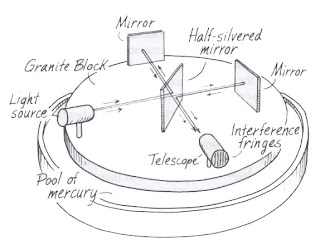
"EL EXPERIMENTO DE MICHELSON-MORLEY (1887) "
![]() |
| Esquema del dispositivo experimental |
https://docs.google.com/document/d/1E8riP6HInk9pfHW9X_lt6E92C26PpBLIW8CVX5rzTWk/edit
.HAY UN ANTES Y UN DESPUÉS...
KNOW
|
WANT TO KNOW
|
LEARNED
|
HOW TO LEARN MORE
|
El experimento de Michelson y Morley tuvo como objetivo determinar el
movimiento del éter respecto a la tierra.
No tuvieron éxito para constatar su hipótesis.
Fue realizado a fines del siglo XIX, en 1887.
|
¿Cómo se tomaron las mediciones para lograr el objetivo?
¿Qué dificultades tuvieron al realizar el experimento?
¿Qué relación tuvo el experimento de Michelson y Morley con la teoría de la relatividad de
Einstein?
|
En el trabajo publicado se especifica cuidadosamente como fueron
tomadas las medidas de las franjas de interferencia y los cálculos
realizados.
Tuvieron que construir el interferómetro sobre una base que flotaba
en mercurio ya que cualquier vibración del exterior provocaba errores en las
mediciones que querían realizar.
La teoría de la relatividad de Einstein se dio a conocer en 1905, y
en el trabajo no se menciona que haya alguna relación con esa teoría.
|
Hay disponibles unos videos muy interesantes que tratan del
experimento. Las direcciones son las siguientes:
|
A ver si te animás!!
1)
¿Verdadero o falso?
a)
El objetivo del experimento de Michelson – Morley
fue constatar la existencia del éter luminífero.
b)
El resultado negativo obtenido en 1881
contribuyo a la construcción de un dispositivo experimental más sofisticado.
c)
Una de los supuestos sobre los que se basaron
Michelson y Morley fueron las transformaciones de Lorentz.
d)
Las mediciones fueron realizadas durante el mes de julio de 1887
2)
Múltiple opción:
A)
El experimento de Michelson Morley de 1887 fue
realizado para:
a)
Determinar la velocidad de la luz
b)
Determinar la velocidad del éter luminífero
c)
Determinar la precisión de sus aparatos
d)
Determinar el movimiento de la tierra a través del
éter lumnífero
B)
La base del dispositivo experimental estaba
flotando sobre:
a)
Mercurio
b)
Agua
c)
Aceite
d)
Detergente
C)
Michelson realizó un experimento anterior en el
año:
a)
1880
b)
1885
c)
1882
d)
1881
D)
Las mediciones fueron realizadas:
a)
De noche y de mañana
b)
Al mediodía y de tarde
c)
De madrugada y de noche
d)
De tarde y de noche
E)
La cantidad de espejos utilizados en el
dispositivo de 1887 fueron:
a)
10
b)
12
c)
15
d)
20
F)
Michelson y Morley proponen realizar otros
experimentos:
a)
Terrestres
b)
Astronómicos
c)
Acuáticos
d)
Aéreos
PUEDES VERIFICAR TUS RESPUESTAS CON LOS RESULTADOS PUBLICADOS EN
https://docs.google.com/document/pub?id=1tdRVQmt6CdE-RIyuvn-TueS1rcgBwmoZjIPnm5BBZ1A
Otros temas realcionados con el experimento los encontramos en:
Suscribirse a:
Entradas (Atom)


